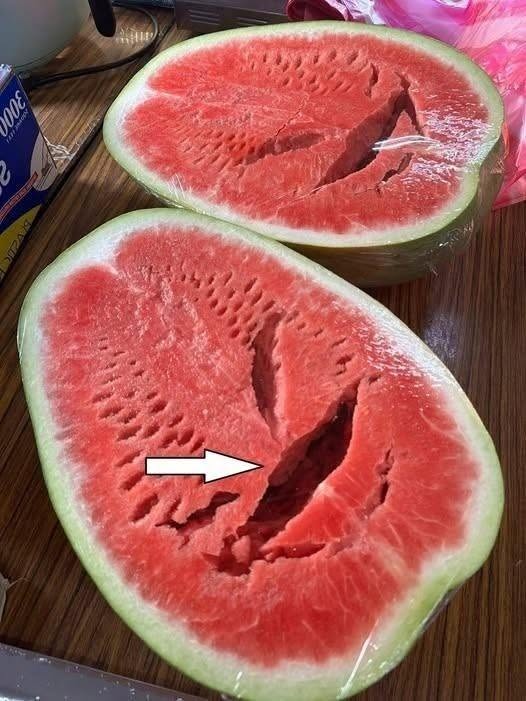
Cutting open a watermelon and finding large cracks, hollow spaces, or unusual cavities inside can look alarming. Viral posts often claim that this means the fruit is “full of chemicals” or unsafe to eat.
That is not always true.
In many cases, internal cracks are caused by a natural condition known as hollow heart, which can develop when the fruit grows unevenly or experiences problems during pollination. A watermelon with clean internal cracks can still be perfectly edible if the flesh is firm, juicy, fresh-smelling, and free from spoilage.
The real warning signs are things like foam, sour odor, slimy flesh, mushiness, leaking liquid, or obvious fermentation.
What Causes Cracks Inside a Watermelon?
Several things can cause the flesh to split or form cavities.
1. Hollow Heart
Hollow heart is a physiological disorder in which the inside of the watermelon develops cracks or open spaces.
It can happen when fruit
growth and tissue development do not occur evenly.
The watermelon may still:
Smell normal
Taste sweet
Feel firm
Be juicy
Have no signs of spoilage
In that situation, the cracking itself does not automatically make the fruit unsafe.
2. Rapid Growth or Irregular Watering
Watermelons grow quickly, and sudden changes in growing conditions can contribute to internal cracking.
For example, a period of dry weather followed by heavy watering or rain can cause fruit to expand rapidly.
That can create internal structural defects even when the outside looks normal.
3. Overripeness
As watermelon becomes overripe, the flesh may become:
Softer
Grainy
Mealy
Less crisp
More likely to separate internally
A slightly overripe watermelon is not automatically dangerous, but quality declines and spoilage becomes more likely.
4. Improper Storage
Heat and poor storage conditions can speed up deterioration.
A watermelon that has been stored too warm for too long may develop
unusual texture, internal breakdown, or fermentation.
What About the Claim That Chemicals Cause the Cracks?
Some viral posts blame a plant-growth regulator called forchlorfenuron, also known as CPPU.
This substance is used in some agricultural applications to influence fruit growth. However, seeing cracks inside a watermelon does not prove that the fruit was treated with this chemical.
Natural hollow heart and other growing conditions can produce very similar appearances.
So you cannot diagnose chemical treatment simply by looking at a cracked watermelon.
When a Cracked Watermelon Is Probably Fine
A watermelon with internal cracks may still be edible when:
The flesh is firm
The color looks normal
It smells fresh and sweet
There is no foam
There is no sliminess
There is no sour or alcoholic smell
The rind was not damaged or punctured
Clean, crisp cavities are more consistent with a growth defect than active spoilage.
When You Should
