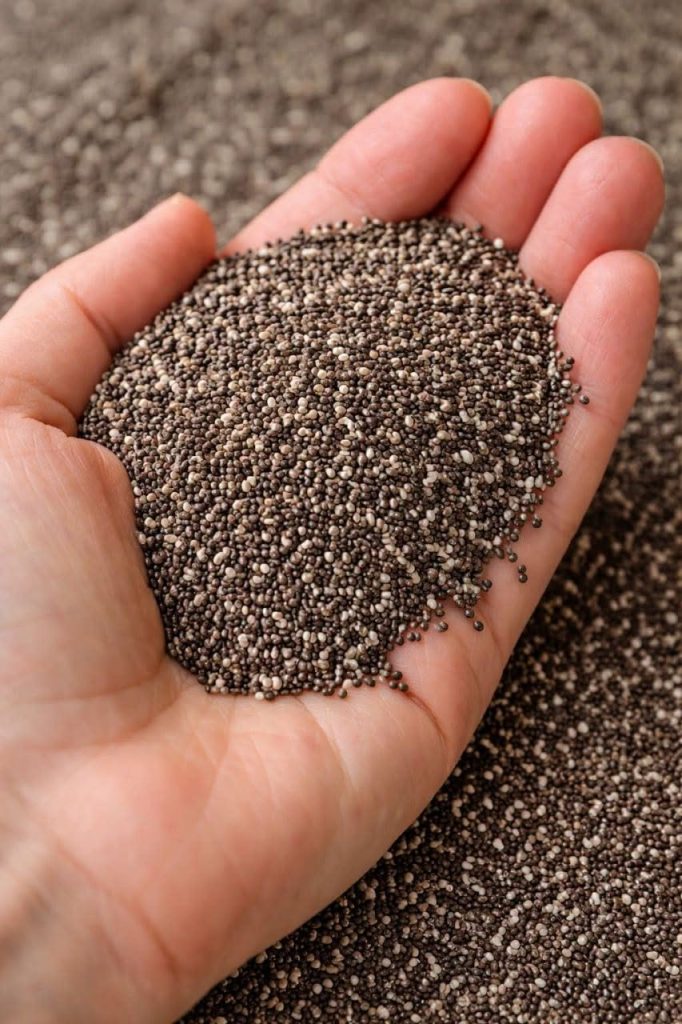
Chia seeds are small edible seeds rich in dietary fiber, plant-based omega-3 fatty acids, protein, minerals, and antioxidant compounds. Their mild flavor makes them easy to add to oatmeal, yogurt, smoothies, salads, and baked foods.
When mixed with liquid, chia seeds absorb water and develop a gel-like coating. This property can help add texture to meals and may contribute to fullness and digestive regularity.
Chia seeds can support a nutritious diet, but they are not a cure for diabetes, heart disease, constipation, or obesity.
Their benefits depend on serving size, adequate fluid intake, the rest of a person’s diet, and individual health needs. Chia seeds are also calorie-dense, so larger quantities are not necessarily better.
What Are Chia Seeds?
Chia seeds come from Salvia hispanica, a flowering plant in the mint family. The plant is native to parts of Mexico and Central America, where its seeds have been used as food for centuries.
The seeds may be black, gray, brown, or white. Color does not generally create a meaningful difference in their basic nutritional value. Chia seeds have a subtle, slightly nutty flavor that blends easily with other ingredients.
They are naturally gluten-free. However, people with celiac disease should choose products certified gluten-free when cross-contact with wheat, barley, or rye is a concern.
Are Chia Seeds a Superfood?
“Superfood” is a marketing term rather than a formal scientific classification. Chia seeds are nutrient-dense, but they do not provide every nutrient the body needs and cannot compensate for an otherwise poor diet.
They are best viewed as one useful component of a varied eating pattern that includes vegetables, fruit, legumes, whole grains, nuts, seeds, and appropriate sources of protein.
Chia Seed Nutrition
A typical serving of two tablespoons, or approximately 28 grams, provides roughly:
About 138 calories
Approximately 4.5 to 5 grams of protein
About 8.5 to 9 grams of fat
Approximately 10 grams of dietary fiber
Nearly 5 grams of alpha-linolenic acid, depending on the product
Calcium, magnesium, phosphorus, manganese, iron, and zinc
Exact values vary by brand, seed variety, growing conditions, and serving measurement. Because much of the carbohydrate in chia consists of fiber, the seeds contain relatively little digestible carbohydrate.
Chia seeds are not an important source of vitamin C or vitamin A, despite claims sometimes made about them. Their primary nutritional strengths are fiber, alpha-linolenic acid, protein, and minerals.
Chia Seeds Are High in Dietary Fiber
Two tablespoons of chia seeds provide approximately 10 grams of fiber, which is a substantial contribution toward daily requirements. Recommended intake varies according to age, sex, calorie needs, and the nutritional standard being used.
Chia seeds contain both soluble and insoluble fiber. Soluble fiber absorbs water and contributes to the gel that forms around the seeds. Insoluble fiber adds bulk to intestinal contents and helps support normal bowel movement.
Increasing fiber too quickly can cause gas, bloating, cramps, or diarrhea. People who currently eat little fiber should begin with a smaller portion and increase it gradually while consuming sufficient fluids.
Chia Seeds and Digestive Health
The fiber in chia seeds can support digestive regularity. Some of the fiber may also be fermented by intestinal bacteria, helping produce compounds that contribute to a healthy intestinal environment.
Chia seeds do not “detoxify” the digestive system, and they are not a treatment for every bowel disorder. Responses vary considerably, particularly among people with irritable bowel syndrome, inflammatory bowel disease, gastroparesis, swallowing disorders, or a history of intestinal narrowing.
If chia seeds consistently cause pain, severe bloating, vomiting, or difficulty swallowing, stop consuming them and seek appropriate medical advice.
Can Chia Seeds Help With Constipation?
The fiber and water-holding capacity of chia seeds may help soften stool and support regular bowel movements in some people. They should be introduced gradually and accompanied by adequate fluid.
Eating a large amount of chia without enough liquid can have the opposite effect and may worsen discomfort or constipation. Chia seeds should not replace medical evaluation when constipation is severe, persistent, accompanied by bleeding, or associated with unexplained weight loss.
There is no need to obtain an entire day’s fiber from chia seeds. Fiber is best supplied by a range of foods, including vegetables, fruit, beans, lentils, whole grains, nuts, and other seeds.
Chia Seeds Provide Plant-Based Omega-3 Fat
Chia seeds are one of the richest plant sources of alpha-linolenic acid, commonly abbreviated as ALA. ALA is an essential omega-3 fatty acid, meaning the body cannot produce it and must obtain it from food.
ALA contributes to normal nutrition and may support cardiovascular health when it replaces some saturated fat in the diet. Other sources include flaxseeds, walnuts, hemp seeds, soy foods, and certain plant oils.
ALA Is Not the Same as EPA and DHA
The body can convert a portion of ALA into eicosapentaenoic acid, or EPA, and then into docosahexaenoic acid, or DHA. This conversion is limited and varies between individuals.
Chia seeds should therefore not be described as nutritionally identical to oily fish or algae-based omega-3 products. Fish provides EPA and DHA directly, while certain algae supplements can provide DHA and sometimes EPA without animal ingredients.
People who avoid fish may use chia seeds as a valuable source of ALA, but those who require preformed EPA or DHA should discuss suitable food or supplement options with a healthcare professional.
Chia Seeds Contain Antioxidant Compounds
