ngue scraper, helps remove debris without irritation. Rinsing with water after meals and maintaining regular dental visits also plays a crucial role in keeping the mouth healthy.
For seniors, oral health is not just about appearance. It directly affects digestion, nutrition, and comfort. A clean mouth supports better appetite and reduces the risk of infections.
Dehydration and the Aging Body
Dehydration is another major contributor to a white tongue, and it is far more common in older adults than many realize.
erlook. Daily oral care habits.
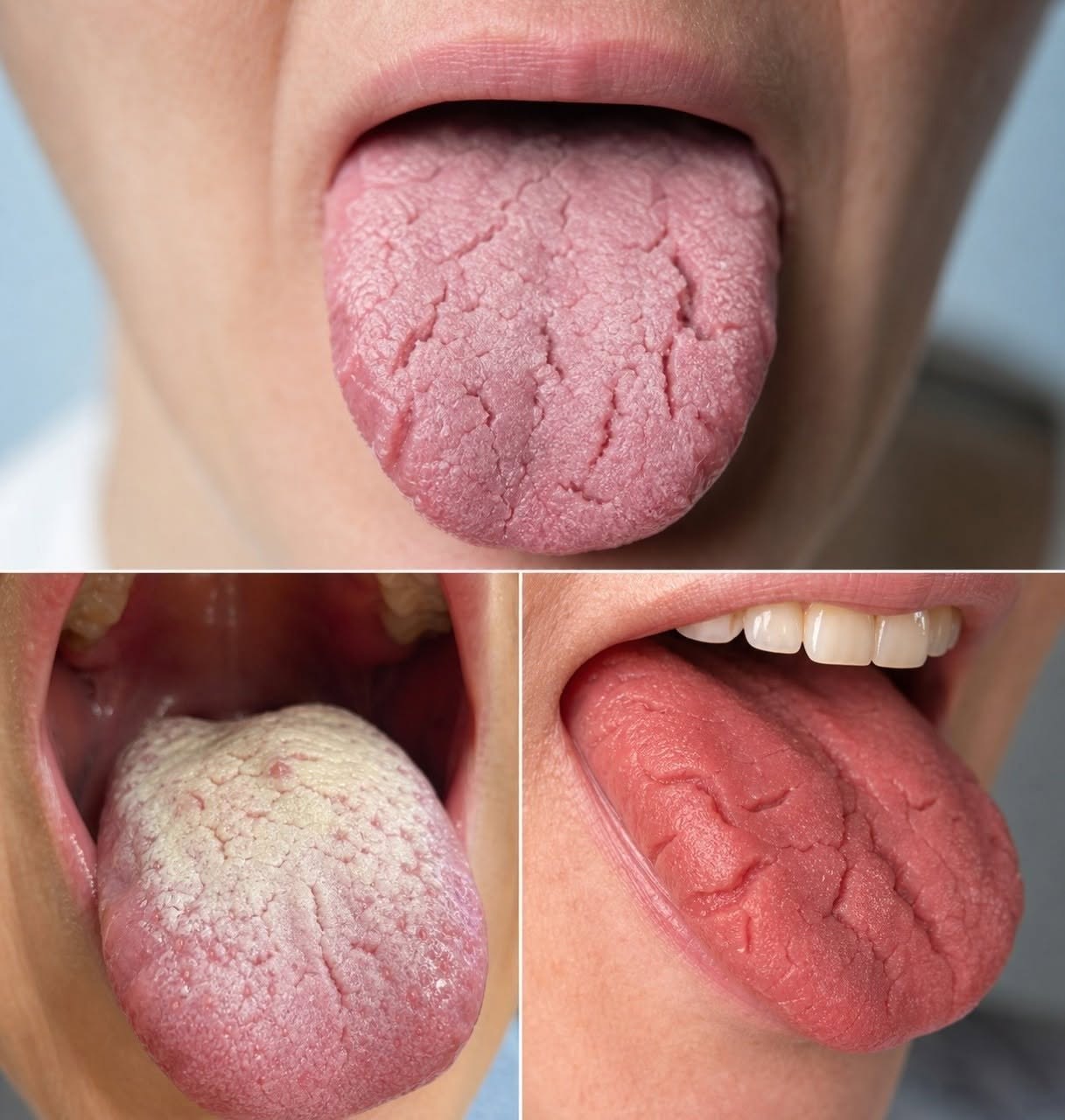
As we age, routines can change. Dentures, dry mouth, sensitive gums, or arthritis can make brushing and flossing more difficult. Unfortunately, when the tongue is not cleaned regularly, bacteria, food debris, and dead cells build up on its surface. Over time, this accumulation forms a visible white coating, especially toward the back of the tongue.
The tongue is not smooth. It has tiny grooves
and papillae that easily trap residue. When saliva production decreases with age or medication use, this buildup becomes even more noticeable.
Improving oral hygiene can often resolve this issue quickly. Gentle brushing of the tongue, using a soft toothbrush or a tongue scraper, helps remove debris without irritation. Rinsing with water after meals and maintaining regular dental visits also plays a crucial role in keeping the mouth healthy.
For seniors, oral health is not just about appearance. It directly affects digestion, nutrition, and comfort. A clean mouth supports better appetite and reduces the risk of infections.
Dehydration and the Aging Body
Dehydration is another major contributor to a white tongue, and it is far more common in older adults than many realize.
As we age, the sensation of thirst becomes less reliable. Many seniors do not feel thirsty even when their bodies need fluids. Certain medications can also reduce saliva
production, leading to a dry mouth. When saliva decreases, the mouth loses its natural ability to wash away bacteria and food particles.
Without adequate moisture, the tongue dries out and develops a pale or white appearance. This is often accompanied by bad breath, difficulty swallowing, or a sticky feeling in the mouth.
Drinking enough water throughout the day is one of the simplest and most effective ways to support oral and overall health. Sipping water regularly, even when you are not thirsty, helps maintain saliva flow and keeps the tongue clean.
Hydration also supports circulation, joint health, digestion, and mental clarity. A white tongue may be your body’s early reminder to drink more fluids and care for yourself more attentively.
Oral Thrush and Immune Balance
In some cases, a white tongue may be linked to oral thrush, a condition caused by an overgrowth of yeast in the mouth. This often
appears as thick, creamy white patches that may feel tender or sore.
Oral thrush is more common in older adults, particularly those with weakened immune systems, diabetes, or those using certain medications such as antibiotics, inhalers, or steroid treatments. Denture wearers are also more susceptible if dentures are not cleaned thoroughly.
Unlike simple buildup, these white patches may bleed slightly when scraped and can leave the tongue feeling raw. This condition should not be ignored, as it may require treatment to restore balance in the mouth.
If you suspect oral thrush, it is important to speak with a healthcare provider. Early attention can relieve discomfort and prevent the condition from spreading or recurring.
Maintaining good oral hygiene, cleaning dentures properly, and managing underlying health conditions can significantly reduce the risk.
Dry Mouth and Medication Side Effects
Many seniors take multiple medications daily, and one common side effect is dry mouth.
