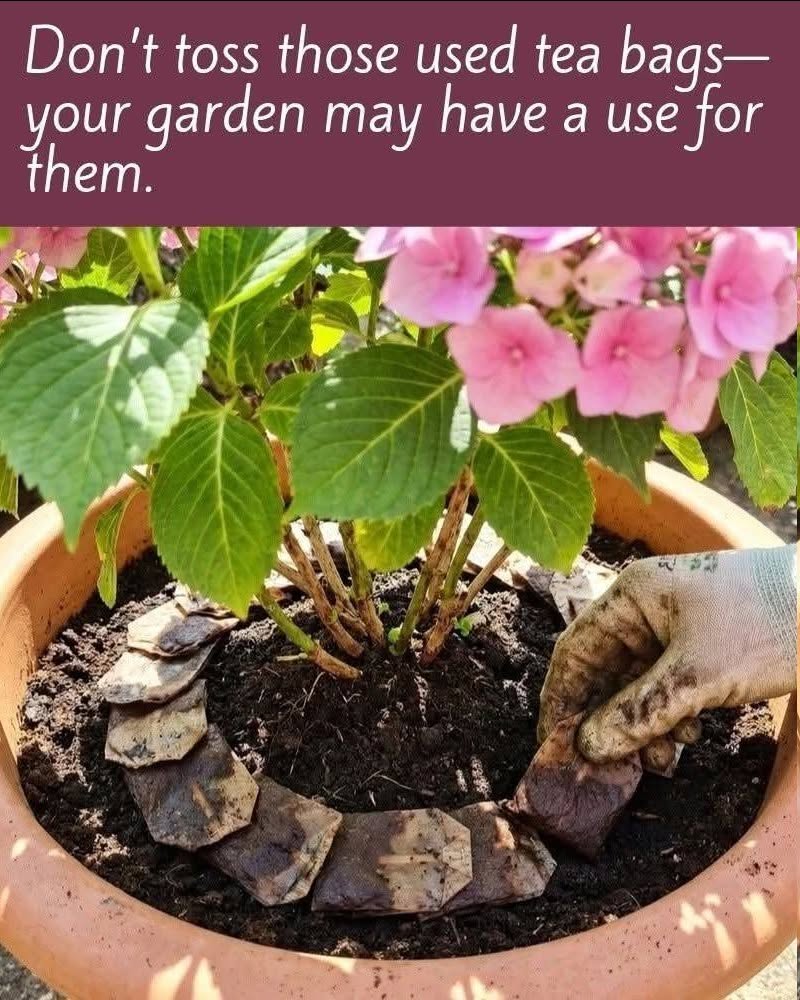
you regularly drink tea, you may be throwing away a useful source of organic material without realizing it. Used tea bags can be added to a compost system, where they contribute organic matter along with other compostable materials.
ADVERTISEMENT
Oregon State University Extension specifically lists coffee filters and tea bags among materials that can be included in a compost pile.
However, used tea bags are not a miracle fertilizer, and they should not simply be buried around every plant. Their usefulness depends on the type of tea bag, the ingredients it contains, and how it is incorporated into your garden routine.
## 1. Roses
Roses benefit from fertile soil containing organic matter, making finished compost a useful addition around established plants. Rather than placing a wet tea bag directly against the stem, compost the used tea material first and incorporate the finished compost into the soil.
This provides a more balanced approach than relying on tea alone.
ADVERTISEMENT
## 2. Herbs
Garden herbs such as basil, parsley, and mint can benefit from healthy, well-managed soil. Used tea leaves can contribute organic material when composted alongside kitchen and garden waste.
Avoid treating tea as a substitute for proper soil preparation, sunlight, watering, and plant nutrition. Those fundamentals remain far more important.
## 3. Flowering Plants
Annual and perennial flowers can benefit from soil improved with finished compost. Compost helps condition soil and can contribute nutrients as organic material breaks down.
Instead of scattering large quantities of used tea around individual plants, add small amounts to your compost pile. This allows the tea material to break down alongside other ingredients.
## 4. Tomatoes
Tomatoes are heavy-feeding garden plants, but that does not mean they need unlimited amendments. Excessive organic material or fertilizer can create nutrient imbalances.
Used tea leaves are better viewed as one small component of a compost system. Once transformed into finished compost, they can become part of a broader soil-building strategy.
If you grow tomatoes in containers, be particularly careful about adding homemade amendments directly to the potting mix. Container plants have less soil volume and can respond differently to nutrient and moisture changes.
## 5. Houseplants
The idea of putting tea directly into houseplant pots is popular, but it is not always a good practice. Wet tea leaves can remain moist, develop unpleasant odors, or encourage mold and fungus if conditions are poorly ventilated.
A better approach is to compost used tea material first and use finished compost appropriately outdoors. For indoor plants, a quality potting mix and fertilizer formulated for the specific plant are generally more predictable choices.
## 6. Vegetable Gardens
Vegetable gardens can benefit from compost because it adds organic matter and helps improve soil structure. Oregon State University Extension recommends compost as a soil conditioner and notes that properly managed compost can be produced from a combination of green and brown materials.
Used tea bags can contribute to that process, but there is an important catch: not every tea bag is equally suitable.
Before composting, check the bag itself. Some modern tea bags contain synthetic fibers or other materials that are not appropriate for home composting. When in doubt, empty the tea leaves from the bag and compost the leaves separately.
## 7. Acid-Loving Plants
You may have heard that tea is an excellent way to acidify soil around blueberries, azaleas, or other acid-loving plants. This claim is often exaggerated.
The acidity of brewed tea varies, and used tea leaves should not be treated as a reliable substitute for a soil amendment specifically designed to adjust pH.
If a plant requires acidic soil, a soil test can help determine whether a pH adjustment is actually necessary.
### The Smarter Way to Reuse Tea Bags
The biggest benefit of used tea bags is not that they magically make particular plants grow faster. Their value comes from reducing household waste and contributing organic material to a properly managed compost pile.
For the best results, use only compostable tea materials, avoid bags containing synthetic components, and combine tea waste with a balanced mixture of other organic materials. Finished compost can then be used as part of a broader garden soil-management plan.
So before you toss your next used tea bag into the trash, check what it is made of. If the materials are suitable, adding the tea leaves to your compost can turn an everyday kitchen leftover into a small but useful part of a healthier garden cycle.
