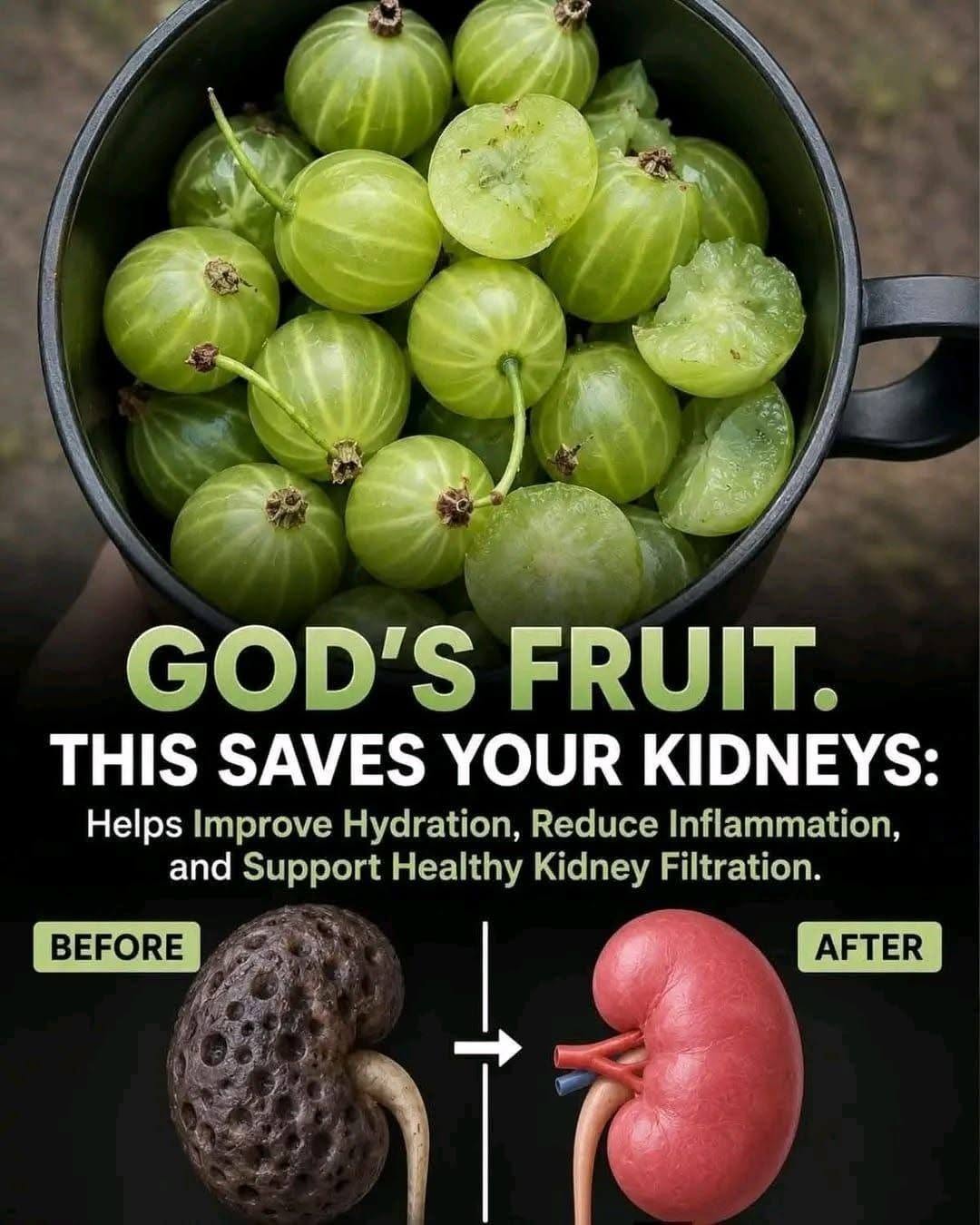
IntroductionThe internet can be a wild place, full of sensational headlines and whispered secrets. You might have stumbled upon a provocative claim: “Doctors Won’t Tell You What Gooseberry Does to Your Kidneys.” While healthcare professionals are certainly well-versed in the benefits of nutrient-rich foods, it’s true that certain natural powerhouses, like the humble gooseberry, sometimes fly under the radar in mainstream discussions. But today, we’re pulling back the curtain, not on a hidden medical conspiracy, but on the incredible, well-documented potential of this tart little fruit, especially when it comes
to supporting your kidney health and overall well-being.Gooseberries, particularly the Indian variety known as Amla (Phyllanthus emblica), have been revered for centuries in traditional medicine systems like Ayurveda. Far from being a secret, their health-boosting properties are widely celebrated in many cultures. These small, round, green berries, often translucent with distinct ridges, pack a powerful punch of vitamins, antioxidants, and other beneficial compounds. Their taste profile is uniquely tart, sour, and astringent, sometimes with a slight bitterness, but often followed by a surprisingly sweet or umami aftertaste that makes
them incredibly versatile in culinary applications. Forget the idea of a “doctor’s secret” and instead, embrace the open secret of nature’s bounty.Before we dive into the delicious world of gooseberry-infused recipes and explore how these amazing fruits can contribute to your health, it’s crucial to state a clear disclaimer: this article is designed for informational purposes only and should not be considered medical advice. While we’ll discuss the potential health benefits of gooseberries, particularly their role in supporting kidney function, always consult a qualified healthcare professional for any kidney
health concerns or before making significant dietary changes, especially if you have existing medical conditions or are on medication. Our goal here is to empower you with knowledge and provide delicious, practical ways to incorporate this nutritional gem into your diet, fostering a proactive approach to your wellness journey.Nutritional InformationPer serving (approximate values for 1/2 cup fresh gooseberries):Calories: 33Protein: 0.7gCarbohydrates: 8gFat: 0.1gFiber: 3.3gSodium: 1mgIngredients1 cup fresh gooseberries (Amla), rinsed and destemmed1-inch piece fresh ginger, peeled and roughly chopped1/2 cup filtered water (or more,
for desired consistency)1-2 tablespoons honey or maple syrup (optional, to taste)Pinch of black salt or rock salt (optional, for enhancing flavor)Fresh mint leaves for garnish (optional)InstructionsPrepare the Gooseberries: Rinse the fresh gooseberries thoroughly under cold water. Gently remove any small stems or blemishes. For easier blending, you can roughly chop the gooseberries, but it’s not strictly necessary as blenders are quite powerful.Combine Ingredients: Place the prepared gooseberries, chopped ginger, and 1/2 cup of filtered water into a high-speed blender.Blend Until Smooth: Blend on
high speed until the mixture is completely smooth and no large pieces remain. This might take 1-2 minutes.Strain (Optional, for a Smoother Drink): For a smoother, pulp-free juice, pour the blended mixture through a fine-mesh sieve or a nut milk bag into a clean bowl or pitcher. Use the back of a spoon to press down on the solids to extract as much liquid as possible. Discard the pulp, or save it for another use (like composting or adding to baked goods for fiber). If you prefer a thicker,
