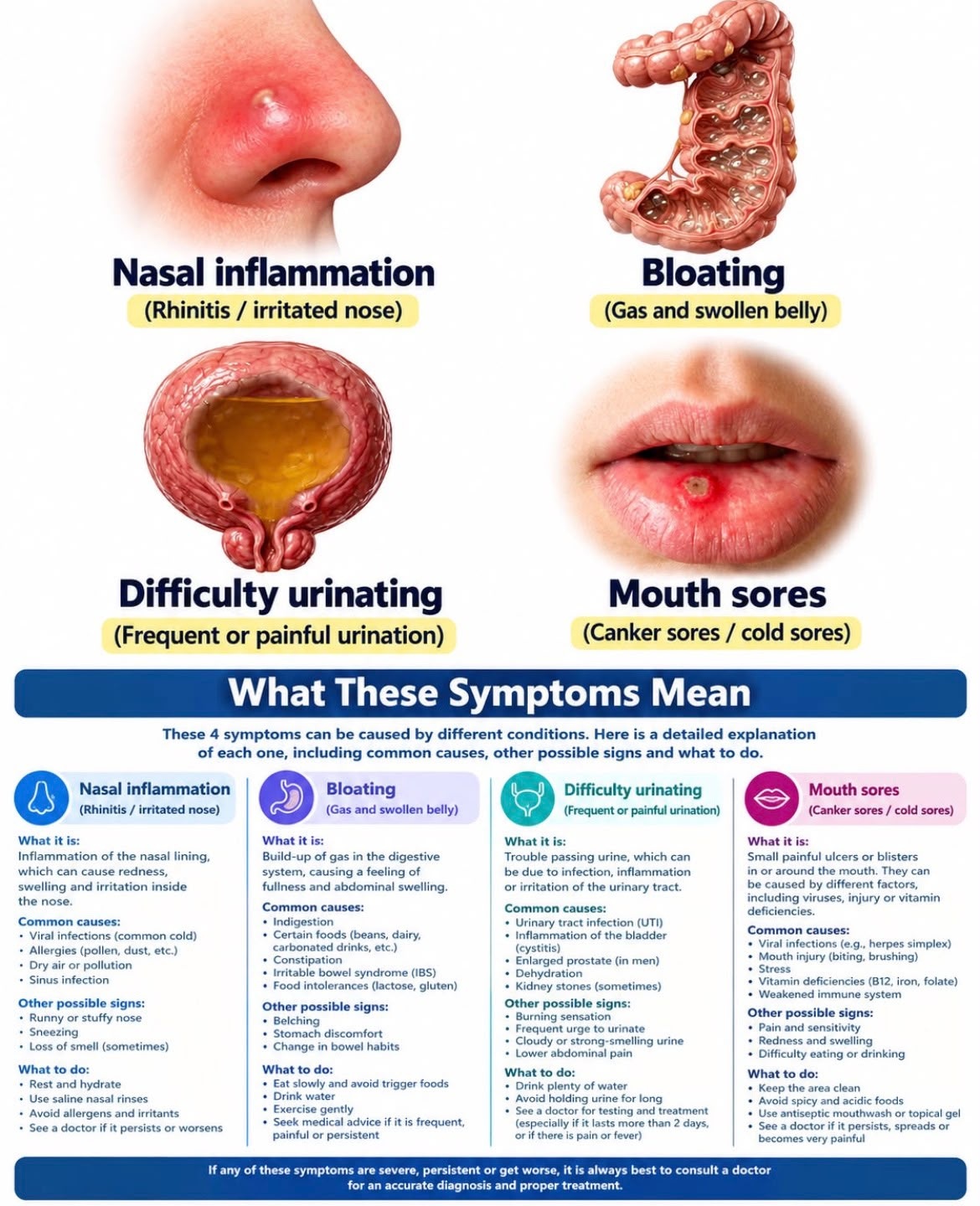
4 Common Symptoms You Should Pay Attention To: Nasal Inflammation, Bloating, Difficulty Urinating, and Mouth Sores
Our bodies often give us signals when something is not quite right. Some symptoms are temporary and harmless, while others may indicate an underlying condition that requires medical attention. Nasal inflammation, bloating, difficulty urinating, and mouth sores are four relatively common symptoms that can have many different causes.
Understanding these symptoms, their possible causes, and the warning signs associated with them can help you know when simple self-care may be enough and when it is better to consult a healthcare professional.
- Nasal Inflammation
Nasal inflammation, commonly associated with rhinitis, occurs when the lining inside the nose becomes irritated or swollen. It may cause redness, congestion, itching, sneezing, or a runny or stuffy nose.
Common causes
Several factors can trigger nasal inflammation, including:
- Viral infections such as the common cold
- Allergies to pollen, dust, or other environmental substances
- Dry air
- Air pollution and other irritants
- Sinus infections
People with allergies may experience repeated sneezing, an itchy nose, watery eyes, and clear nasal discharge. In contrast, an infection may be accompanied by other symptoms such as fatigue, sore throat, cough, or fever.
What can help?
Depending on the cause, simple measures may provide relief. Drinking enough water, avoiding known allergens and irritants, and using a saline nasal rinse can help keep the nasal passages comfortable.
If symptoms are severe, persist for a long time, repeatedly return, or are accompanied by significant facial pain or fever, medical evaluation may be appropriate.
⸻
- Bloating
Bloating is a sensation of fullness, pressure, or swelling in the abdomen. It is often caused by an accumulation of gas or changes in digestion.
Bloating can occur occasionally after eating a large meal, but frequent or persistent bloating deserves more attention.
Common causes
Some common causes include:
- Eating too quickly
- Gas-producing foods
- Carbonated beverages
- Certain dairy products or other food intolerances
- Constipation
- Irritable bowel syndrome (IBS)
- Changes in normal bowel habits
Some people also experience belching, abdominal discomfort, increased intestinal gas, or changes in stool frequency when they are bloated.
How can bloating be reduced?
Eating slowly and chewing food thoroughly may reduce the amount of air swallowed during meals. Drinking enough water, staying physically active, and identifying foods that consistently trigger symptoms may also help.
If bloating becomes persistent, painful, or is associated with unexplained weight loss, vomiting, blood in the stool, or major changes in bowel habits, a doctor should evaluate the problem.
⸻
- Difficulty Urinating
Difficulty urinating refers to problems starting or maintaining urination, a weak urinary stream, painful urination, or a frequent and urgent need to urinate.
This symptom can have several causes, and the cause may differ depending on a person’s age, sex, medical history, and other symptoms.
Possible causes
Common possibilities include:
- Urinary tract infections
- Bladder inflammation
- An enlarged prostate in men
- Kidney stones
- Dehydration
- Irritation of the urinary tract
An enlarged prostate, for example, can make it difficult for some men to start urinating or completely empty the bladder.
Other symptoms to watch for
Difficulty urinating may occur together with:
- Burning or pain during urination
- Frequent urination
- A strong or sudden urge to urinate
- Cloudy or unusually strong-smelling urine
- Lower abdominal discomfort
Drinking an appropriate amount of water and avoiding holding urine for excessively long periods may be helpful in some situations.
However, being unable to urinate at all can be an emergency, particularly if the bladder is painful or swollen. In that situation, urgent medical care is necessary.
⸻
- Mouth Sores
Mouth sores are small ulcers or lesions that can develop on the lips, gums, tongue, or inside the cheeks.
They may appear as painful red or swollen areas, sometimes with a white or yellowish center.
Possible causes
Mouth sores can have many causes, including:
- Minor injuries from biting the mouth
- Irritation from brushing or dental appliances
- Viral infections
- Stress
- Nutritional deficiencies, including iron, vitamin B12, or folate deficiency
- Certain medications or medical conditions
- A weakened immune system
Cold sores caused by herpes simplex virus usually have a different appearance and commonly occur around the lips, while canker sores typically develop inside the mouth.
What can help?
Keeping the mouth clean and avoiding foods that are very spicy, acidic, or irritating can reduce discomfort. Gentle oral hygiene is also important.
Most minor mouth ulcers heal on their own. However, a healthcare professional or dentist should evaluate sores that are unusually large, extremely painful, repeatedly recurring, spreading, or failing to heal.
⸻
When Should You See a Doctor?
These four symptoms are not necessarily connected to one single disease. Each can result from many different conditions, ranging from minor and temporary problems to conditions requiring treatment.
You should consider seeking medical advice when symptoms:
- Persist or repeatedly return
- Become increasingly painful
- Interfere with eating, drinking, sleeping, or normal activities
- Are accompanied by fever or significant weakness
- Occur with unexplained weight loss
- Become suddenly severe
- Are associated with bleeding or other unusual symptoms
In particular, complete inability to urinate, severe abdominal pain, difficulty breathing, heavy bleeding, or a rapidly worsening condition requires prompt medical attention.
Conclusion
Nasal inflammation, abdominal bloating, difficulty urinating, and mouth sores are common symptoms, but their causes can vary considerably. Paying attention to how long a symptom lasts, what triggers it, and whether other symptoms appear at the same time can provide useful information.
Self-care may be appropriate for mild, short-lived symptoms, but persistent or severe symptoms should not simply be ignored. A healthcare professional can determine the underlying cause and recommend the appropriate treatment.
This article is for general educational purposes and does not replace a medical diagnosis or professional medical advice.
