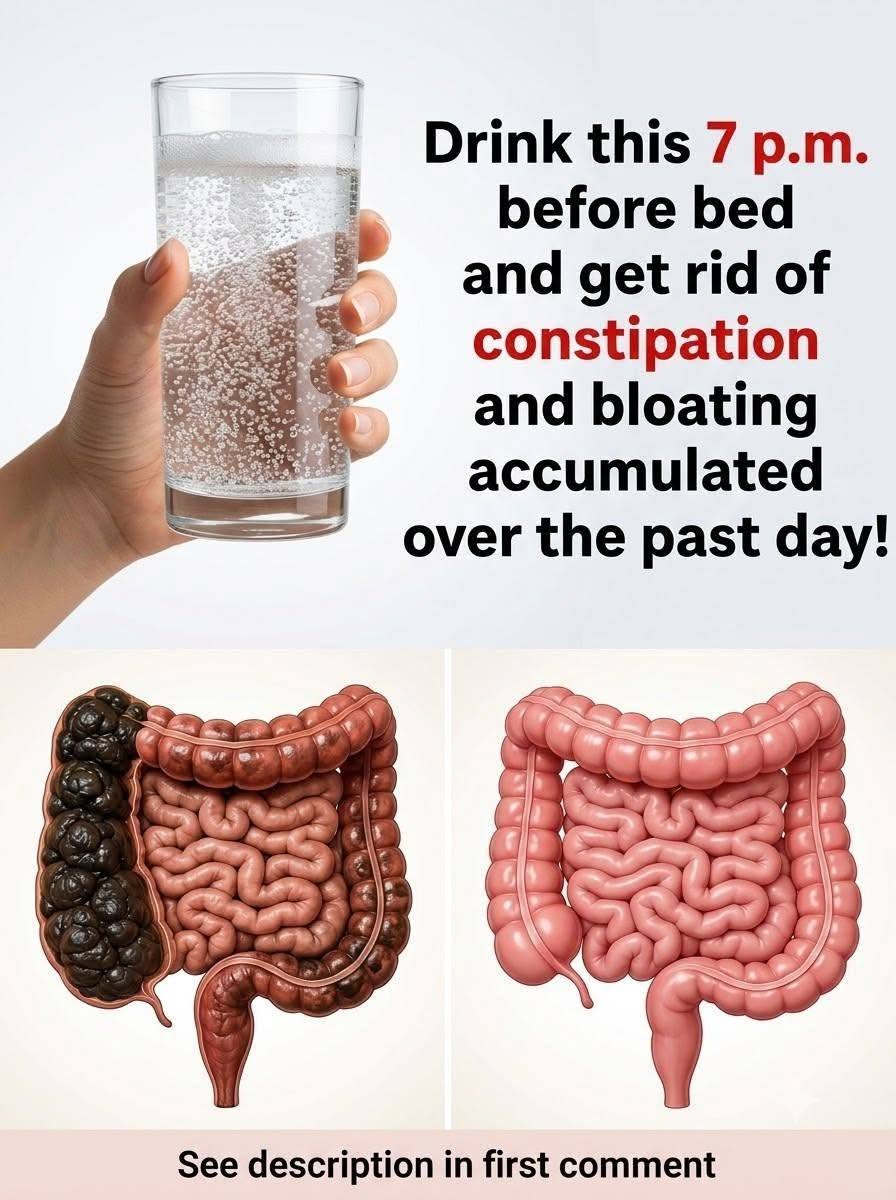
If you often wake up feeling bloated, heavy, or uncomfortable because your bowels have not moved normally, you may have wondered whether there is a simple way to support digestion before going to bed.
You may have seen claims online about “cleansing 15 kilograms of waste from the colon overnight.” While this sounds dramatic, there is no reliable evidence that a drink can remove 15 kilograms of waste from the colon in a single night.
The good news is that you do not need an extreme detox to support healthy bowel movements. Your digestive system is already designed to move waste through the body. Instead of trying to “flush” the colon, a better approach is to support regular bowel movements with adequate fluids, fiber, movement, and healthy daily habits.
Hand holding carbonated water il… 2K 20260926143709
arrow_forward_iosRead more
Can You
Really Remove 15 Kilograms of Waste
Overnight?
The short answer is no.
The amount of stool and digestive contents in the intestines varies from person to person. A person who is constipated may have stool accumulated in the colon, but the idea that everyone carries 15 kilograms of old waste that can simply be flushed out overnight is not supported by medical evidence.
Colon cleansing is also different from normal digestion. According to Mayo Clinic, the digestive system naturally removes waste from the body, and there is no good evidence that routine colon cleansing is necessary to remove so-called toxins. Some forms of aggressive colon cleansing can also cause dehydration, electrolyte problems, cramping, diarrhea, infection, or other complications.
So rather than looking for a powerful overnight “flush,” focus on helping your digestive system function normally.
What Does Constipation Actually Mean?
Constipation is more than simply not having a bowel movement
every day.
According to
the National Institute of Diabetes and Digestive and Kidney Diseases (NIDDK), symptoms can include:
Having fewer than three bowel movements per week
Hard, dry, or lumpy stools
Pain or difficulty when passing stool
Feeling that you have not completely emptied your bowels
Abdominal discomfort or bloating
Not everyone has the same normal bowel pattern, so occasional differences do not necessarily mean something is wrong.
Constipation can be associated with not getting enough fiber, inadequate fluid intake, low physical activity, changes in routine, ignoring the urge to use the bathroom, certain medications, and some medical conditions.
A Gentle Evening Routine for Better Digestion
Instead of attempting an extreme colon cleanse, try creating a simple evening routine that supports normal digestion.
- Drink Water Throughout the Day
Adequate fluid intake can help keep stool softer and easier to pass.
Water is particularly important when you increase your fiber intake
because
fiber works together with fluids to support softer stools.
Rather than drinking a huge amount of water immediately before bed, spread your fluid intake throughout the day.
This may also help you avoid waking repeatedly during the night to use the bathroom.
- Increase Fiber Gradually
Fiber is one of the most important dietary tools for supporting regular bowel movements.
Good sources include:
Oatmeal
Whole-grain bread
Beans and lentils
Apples and pears
Berries
Vegetables
Nuts and seeds
Flaxseed
NIDDK notes that adults generally need around 22 to 34 grams of fiber per day, depending on age and sex. However, increasing fiber too quickly can cause additional gas or bloating, so it is better to increase it gradually.
- Take a Gentle Walk
Movement can also support bowel regularity.
You do not need an intense workout. A comfortable walk after dinner may be enough to help you stay active and establish
healthier routine.
Regular physical activity is included among the lifestyle measures recommended for constipation.
-
- Do Not Ignore the Urge
One surprisingly simple habit is to use the bathroom when your body signals that it is time.
- Do Not Ignore the Urge
Repeatedly ignoring the urge to have a bowel movement can contribute to constipation.
A regular bathroom routine can also help. NIDDK notes that trying to have a bowel movement at a consistent time, such as after breakfast, may help establish regularity.
What About a Warm Drink Before Bed?
A warm, non-alcoholic drink can be a comforting part of an evening routine, particularly if it helps you maintain adequate fluid intake.
However, it is important not to confuse comfort with a medical “detox.”
A simple option is:
Simple evening hydration drink
1 cup of warm water
Optional: a small amount of lemon for flavor
Drink slowly rather than consuming a large amount at once
This
drink should be viewed as a hydration habit, not a treatment that physically washes kilograms of waste out of the colon.
If you have a medical condition that requires you to restrict fluids, follow your healthcare professional’s advice instead.
Foods That Can Support Regularity
If constipation is a recurring problem, your overall diet is usually more important than one special drink.
Try incorporating more naturally fiber-rich foods into your meals.
Fruits
Apples, pears, berries, oranges, and other fruits can contribute fiber to the diet. Some fruits also contain naturally occurring compounds such as sorbitol that may help make stools easier to pass.
Vegetables
Vegetables such as broccoli, carrots, peas, and leafy greens can increase your daily fiber intake.
Whole Grains
Oats, whole-wheat bread, brown rice, and other whole grains can be useful alternatives to highly refined grains.
Beans and Lentils
Beans, chickpeas, lentils, and other legumes are naturally rich
in
fiber and can be included in soups, salads, or main meals.
Seeds
Flaxseed and other seeds can contribute fiber to the diet. If you increase your fiber intake, remember to increase fluids appropriately as well.
Why You May Feel “Full of Waste”
Bloating does not necessarily mean that kilograms of old stool are sitting inside your colon.
Bloating can have many possible causes, including constipation, gas, eating habits, food intolerances, changes in gut movement, and other digestive issues.
This is why the sensation of being “full” should not automatically be interpreted as evidence that your colon needs an aggressive cleanse.
A healthier goal is regular digestion rather than extreme emptying.
Should You Use Laxatives or Detox Teas?
Be careful with products marketed as overnight colon cleansers, detox teas, or powerful laxatives.
Some laxatives can be appropriate for constipation, but the choice depends on the situation. NIDDK notes that healthcare.
